

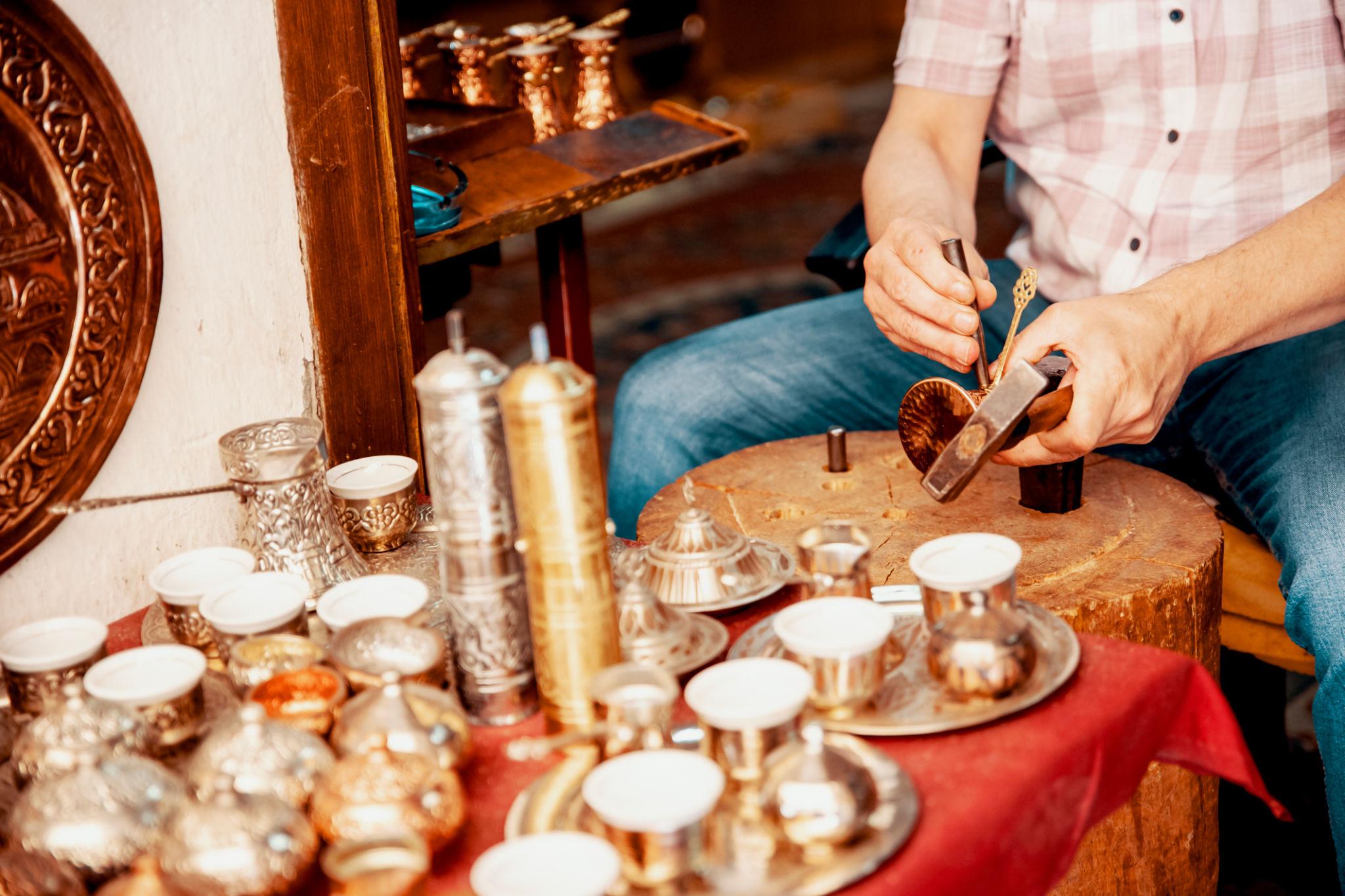
Few pieces of coffee equipment are as iconic as the copper Turkish coffee pot, traditionally known as a cezve or ibrik. For hundreds of years, this distinctive brewing pot has been at the heart of Turkish coffee culture, producing the rich aroma, velvety texture and famous foam that make Turkish coffee unlike any other brewing method.
While modern coffee makers focus on speed and automation, a handcrafted copper cezve celebrates patience, craftsmanship and tradition. Every authentic copper Turkish coffee pot tells a story—one that begins in the workshops of skilled artisans and continues every time coffee is brewed.
Whether you're new to Turkish coffee or looking to upgrade your brewing equipment, understanding how a copper coffee pot is made explains why it remains the preferred choice for coffee enthusiasts around the world.
The History of the Copper Turkish Coffee Pot
The origins of the copper Turkish coffee pot date back to the Ottoman Empire, when coffee became an important part of daily life and hospitality. Coffee houses flourished throughout Istanbul, and craftsmen developed the now-famous cezve shape specifically for brewing finely ground Turkish coffee.
For generations, master coppersmiths have passed their techniques from father to son and apprentice to master. Even today, many of the finest copper Turkish coffee pots are still handmade using centuries-old methods.
Unlike mass-produced cookware, each handcrafted cezve carries subtle differences that make it unique, preserving a tradition that has changed remarkably little over hundreds of years.
Why Copper Is the Best Material for Turkish Coffee
One of the biggest reasons copper has remained the traditional material is its exceptional heat conductivity.
Copper heats rapidly while distributing heat evenly across the entire pot. This allows the coffee to warm slowly and consistently, preventing scorching while encouraging the gradual formation of the rich foam—known as kaimaki—that defines authentic Turkish coffee.
Benefits of Copper Turkish Coffee Pots
- Excellent heat conductivity
- Even brewing temperature
- Creates rich, creamy foam
- Durable and long-lasting
- Beautiful handcrafted appearance
- Can last decades with proper care
Unlike stainless steel, which can create hot spots, copper ensures the coffee extracts evenly, resulting in a smoother and more balanced flavour.
Why Are Copper Coffee Pots Lined with Tin?
Pure copper should not come into direct contact with acidic foods or drinks, including coffee.
That's why authentic copper Turkish coffee pots are coated on the inside with a thin layer of food-safe tin. This traditional tin lining preserves all the heat-conducting benefits of copper while creating a safe surface for brewing.
Over many years of use, the tin lining may eventually wear. One of the advantages of high-quality handcrafted copper cookware is that it can often be professionally re-tinned, extending its life for decades.
How Copper Turkish Coffee Pots Are Made
1. Selecting High-Quality Copper
The process begins with sheets of pure copper.
Experienced craftsmen carefully choose copper of the correct thickness. The quality of the copper affects both the durability of the finished coffee pot and how efficiently it transfers heat during brewing.
2. Cutting and Shaping
The copper sheet is precisely cut before being shaped into the instantly recognisable form of the cezve.
The traditional design isn't simply decorative. Its proportions are carefully engineered:
- Wide base for even heating
- Narrow neck for foam formation
- Pouring lip for serving
- Long handle for safe brewing
These design elements have remained largely unchanged for centuries because they simply work.
3. Hand Hammering
One of the defining characteristics of authentic Turkish coffee pots is their beautiful hammered finish.
Using dozens—sometimes hundreds—of carefully placed hammer strikes, artisans create the textured surface seen on traditional copper cookware.
Hand hammering serves two purposes:
- It strengthens the copper.
- It creates the distinctive handcrafted appearance.
Since every hammer strike is made individually, no two coffee pots are ever completely identical.
4. Attaching the Handle
The handle is then fitted using sturdy copper or brass rivets.
Depending on the style, handles may be made from:
- Brass
- Copper
- Walnut wood
- Beech wood
- Olive wood
The long handle protects the user from heat while allowing precise control when the coffee begins to rise.
5. Tinning the Interior
The inside of the coffee pot is carefully coated with molten food-safe tin.
This process requires significant skill because the lining must be:
- Smooth
- Even
- Fully bonded to the copper
A well-applied tin lining provides years of reliable use while maintaining the pot's excellent brewing performance.
6. Polishing and Decoration
Finally, the coffee pot is polished to create its finished appearance.
Some artisans leave the copper bright and reflective, while others decorate it with:
- Ottoman-inspired engravings
- Geometric patterns
- Floral motifs
- Traditional hammered textures
Many premium Turkish coffee pots become treasured family heirlooms passed down through generations.
Why the Shape of a Turkish Coffee Pot Matters
The classic cezve shape is the result of centuries of refinement.
Wide Base
The wider base maximises contact with the heat source, allowing water and coffee grounds to warm evenly.
Narrow Neck
The narrow neck slows the rising foam, helping it build into the thick layer prized in Turkish coffee preparation.
Pouring Lip
The carefully shaped spout makes it easier to pour the coffee without disturbing the foam.
Without this distinctive shape, producing authentic Turkish coffee becomes much more difficult.
Handcrafted vs Machine-Made Copper Coffee Pots
| Handcrafted | Machine-Made |
|---|---|
| Individually hammered | Pressed by machine |
| Unique finish | Uniform appearance |
| Traditional craftsmanship | Mass production |
| Often thicker copper | Often thinner material |
| Longer lifespan | Usually lower durability |
For coffee lovers who appreciate authenticity, a handmade copper Turkish coffee pot offers both superior craftsmanship and a genuine connection to centuries of tradition.
Caring for Your Copper Turkish Coffee Pot
With proper care, a quality copper cezve can last for decades.
- Wash by hand with warm water and mild washing-up liquid.
- Never use abrasive scouring pads.
- Dry thoroughly after cleaning.
- Polish the exterior occasionally if you prefer a bright finish.
- Never leave water sitting inside for long periods.
- Avoid putting it in the dishwasher unless the manufacturer specifically states it is dishwasher safe.
Over time, the copper exterior naturally develops a soft patina. Many coffee enthusiasts consider this part of the coffee pot's charm, while others prefer to polish it regularly to restore its original shine.
Why Coffee Enthusiasts Still Choose Copper
Despite the availability of stainless steel, aluminium and electric coffee makers, copper remains the preferred choice for traditional Turkish coffee because it delivers:
- Better heat distribution
- More consistent brewing
- Richer aroma
- Superior foam formation
- Authentic brewing experience
- Beautiful handcrafted design
For many families throughout Türkiye and the Middle East, the copper cezve is far more than a kitchen utensil—it's a symbol of hospitality, tradition and shared moments over coffee.
Experience Authentic Turkish Coffee at Home
A handcrafted copper Turkish coffee pot is more than just brewing equipment—it's an investment in a centuries-old coffee tradition. Every carefully hammered surface, every polished finish, and every perfectly shaped neck reflects the skill of artisans who have refined their craft over generations.
Whether you're making coffee for yourself or serving guests, a quality copper cezve helps you create the rich flavour, velvety texture and signature foam that define authentic Turkish coffee.
Pair it with freshly ground Turkish coffee, fresh water and a little patience, and you'll experience one of the world's oldest and most cherished coffee traditions exactly as it has been enjoyed for centuries.